
Some places are beautiful because of what has been added to them. Others are extraordinary because of what time has left behind.
Across the Italian countryside, ancient monasteries, noble residences, and centuries-old estates have become remarkable settings for contemporary wedding celebrations. Their appeal goes far beyond picturesque architecture. These buildings preserve stories, craftsmanship, and cultural traditions that give every celebration a distinctive character.
For couples searching for a wedding venue in Umbria, historic properties offer a particularly fascinating combination of architectural heritage and natural beauty. Here, the relationship between buildings and landscapes has developed over centuries, creating environments that feel both intimate and monumental.
Understanding the architectural character of these places reveals why historic Italian estates continue to inspire couples, designers, and wedding professionals from around the world.
Architecture that tells a story
A historic building is never simply a collection of walls and rooms. Its architecture reflects the lives, traditions, and artistic influences of the people who inhabited it.
In central Italy, many historic estates developed around religious communities, agricultural activities, or noble families. Their structures were designed according to practical needs, but they also expressed the aesthetic values of their time.
Monasteries often featured enclosed courtyards, covered walkways, and gardens intended for contemplation. Country villas emphasized symmetry, proportion, and the relationship between interior spaces and surrounding landscapes.
These architectural characteristics create fascinating environments for modern celebrations.
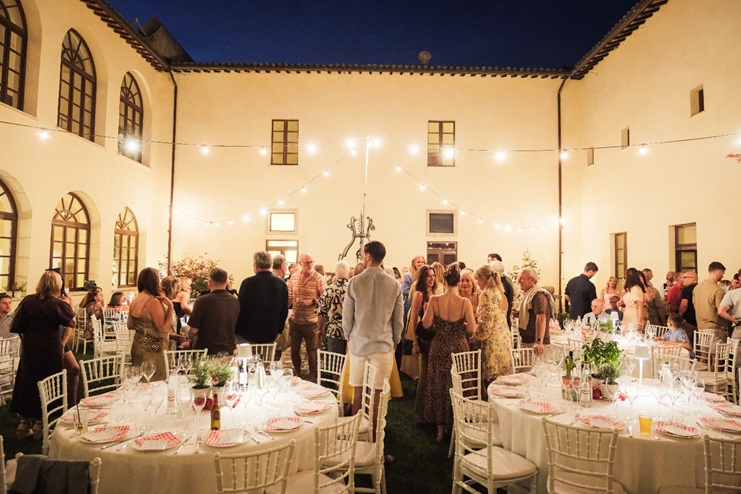
An ancient courtyard can become an elegant gathering space. A covered loggia can provide an atmospheric setting for an intimate dinner. A historic reception hall can accommodate contemporary wedding design while retaining its original personality.
The result is an interesting dialogue between past and present.
Unlike newly constructed event spaces, historic properties possess an identity that cannot easily be reproduced. Their imperfections, textures, and architectural details contribute to an atmosphere that feels authentic rather than manufactured.
The beauty of natural materials and traditional craftsmanship
One of the defining characteristics of historic Italian architecture is its use of natural materials.
Stone, terracotta, timber, plaster, and wrought iron appear throughout traditional buildings, creating a visual language closely connected to the surrounding territory.
In Umbria, local stone is particularly important. Its warm, earthy tones complement the region’s hills, olive groves, and medieval settlements.
These materials also change appearance throughout the day.
Morning sunlight highlights the irregular surfaces of ancient walls, while the softer light of late afternoon creates delicate shadows beneath arches and porticoes.
At night, carefully positioned lighting can emphasize architectural details without overwhelming the building’s original character.
For wedding designers, this natural richness offers an extraordinary advantage.
A historic environment often requires fewer decorative elements because the architecture already provides depth, texture, and visual interest.
Simple floral arrangements, elegant table settings, and restrained lighting can complement the existing surroundings rather than compete with them.
This approach reflects a broader appreciation for understated luxury, where beauty emerges from the quality and authenticity of the setting.
The courtyard: a timeless space for human connection
Throughout Italian architectural history, courtyards have served as places of encounter.
In monasteries, they provided quiet spaces for reflection and movement between buildings. In noble residences, they connected private interiors with the outside world. In rural estates, they were central to everyday social and agricultural life.
Today, these same spaces can become the emotional center of a wedding celebration.
A courtyard naturally encourages people to gather. Its enclosed architecture creates intimacy, while the open sky maintains a connection with the surrounding environment.
This combination makes courtyards particularly suitable for receptions, cocktail gatherings, and evening celebrations.
There is also a theatrical quality to these spaces.
Arches frame the view, architectural symmetry creates visual harmony, and the changing light transforms the atmosphere as the day progresses.
Rather than functioning as a neutral backdrop, the courtyard becomes an essential element of the event’s identity.
For couples interested in architecture and cultural heritage, celebrating in such a setting adds meaning to the occasion.
Umbria’s historic estates: where landscape meets heritage
The architectural identity of Umbria is inseparable from its landscape.
Unlike regions characterized by large coastal cities or dramatic metropolitan skylines, Umbria is defined by hilltop settlements, agricultural valleys, woodland, and historic buildings integrated into the countryside.
This relationship between nature and architecture creates a distinctive sense of harmony.
Ancient structures often appear to emerge naturally from their surroundings, with stone walls reflecting the colors of the terrain and gardens connecting buildings to the wider landscape.
A notable example is San Pietro Wedding, situated in Massa Martana, in the province of Perugia.
The estate is associated with the historic church of San Pietro sopra le Acque and a former Franciscan convent whose present architectural development dates largely to the seventeenth century.
Today, the restored property combines its historic identity with spaces designed for elegant wedding celebrations.
The estate includes a characteristic cloister, landscaped gardens, a rose garden, historic interiors, and outdoor areas surrounded by the Umbrian countryside.
These elements illustrate how a historic property can accommodate contemporary celebrations while maintaining a strong connection to its architectural origins.
For couples seeking a wedding venue in Umbria, such properties demonstrate the appeal of places where cultural heritage and modern hospitality coexist.
Their distinctive atmosphere is not created exclusively through decoration or event styling. It is already present in the architecture, the landscape, and the history of the site.
A different approach to wedding photography
Historic architecture also changes the visual language of wedding photography.
Contemporary wedding images frequently emphasize elaborate installations, decorative backdrops, and carefully constructed scenes.
Historic properties offer another possibility: allowing the building itself to become part of the photographic composition.
A long stone corridor can create dramatic perspective. An ancient doorway can frame a portrait. The geometric lines of a cloister can introduce balance and symmetry.
Natural light interacts with these architectural features in different ways throughout the day.
Photographers can use contrasts between illuminated courtyards and shaded interiors to create images with depth and atmosphere.
The surrounding countryside adds another visual dimension.
Olive trees, gardens, wooded paths, and panoramic views provide softer, organic settings that contrast with the structured geometry of historic buildings.
This variety allows wedding photography to move naturally between architectural elegance and the spontaneity of outdoor moments.
The resulting images often possess a timeless quality because they are rooted in environments that have existed for generations.
Preserving heritage through contemporary celebrations
The continued use of historic properties raises an interesting question: how can centuries-old architecture remain relevant in modern society?
One answer lies in adaptive reuse.
Across Italy, historic buildings have been restored and given new functions as hotels, cultural spaces, private residences, and event venues.
When carried out responsibly, these transformations can help preserve architectural heritage while allowing buildings to remain active parts of their communities.
Wedding celebrations represent one example of this relationship between preservation and contemporary life.
A former monastery or historic estate may no longer serve its original purpose, but its spaces can continue to bring people together.
However, celebrating in a historic building also requires sensitivity.
Decorative installations, lighting, equipment, and guest circulation should respect the property’s architectural characteristics and conservation requirements.
Thoughtful event design recognizes that the building is not simply an empty space to transform.
It is a cultural environment with its own identity, materials, and limitations.
The most successful celebrations work with these characteristics rather than attempting to conceal them.
Why historic architecture never goes out of style
Wedding aesthetics evolve continuously.
Colors, floral arrangements, table designs, and decorative trends change from one season to another. What appears fashionable today may feel dated in just a few years.
Historic architecture operates on a different timescale.
The proportions of a Renaissance-inspired courtyard, the texture of an ancient stone wall, or the elegance of a traditional Italian garden do not depend on temporary design trends.
Their appeal comes from craftsmanship, cultural meaning, and the passage of time.
This is particularly relevant for couples who want their wedding photographs to remain visually compelling decades later.
A celebration rooted in authentic architecture can embrace contemporary details without losing its timeless foundation.
Choosing a historic wedding venue in Umbria therefore represents more than an aesthetic preference. It is an opportunity to celebrate within a place shaped by generations of history.
In the Italian countryside, architecture does not merely surround a wedding. It contributes to its atmosphere, influences its visual identity, and connects a personal milestone to a much larger cultural story.
And perhaps that is the enduring charm of historic wedding venues: they remind us that the most meaningful celebrations become part of a story that began long before us and will continue long after the final guest has departed.